
CASE STUDYCase studies
Korea National Open University: using Open Badges to make visible the learning that a degree alone cannot convey
Overview
An Open Badge initiative connecting majors, employment, and lifelong learning
Korea National Open University is advancing the use of Open Badges to show students' learning outcomes not only as degrees and grades but also as the abilities and experience they have gained.
At the heart of the plan is a four-stage competency badge roadmap that connects majors and practical training, advanced technology, employment and extracurricular activities, and lifelong education. The university will recognize learning at the university as granular achievements, so that students can also use them for career development and for continuing education after graduation.
About
A distance-learning university that supports diverse learners
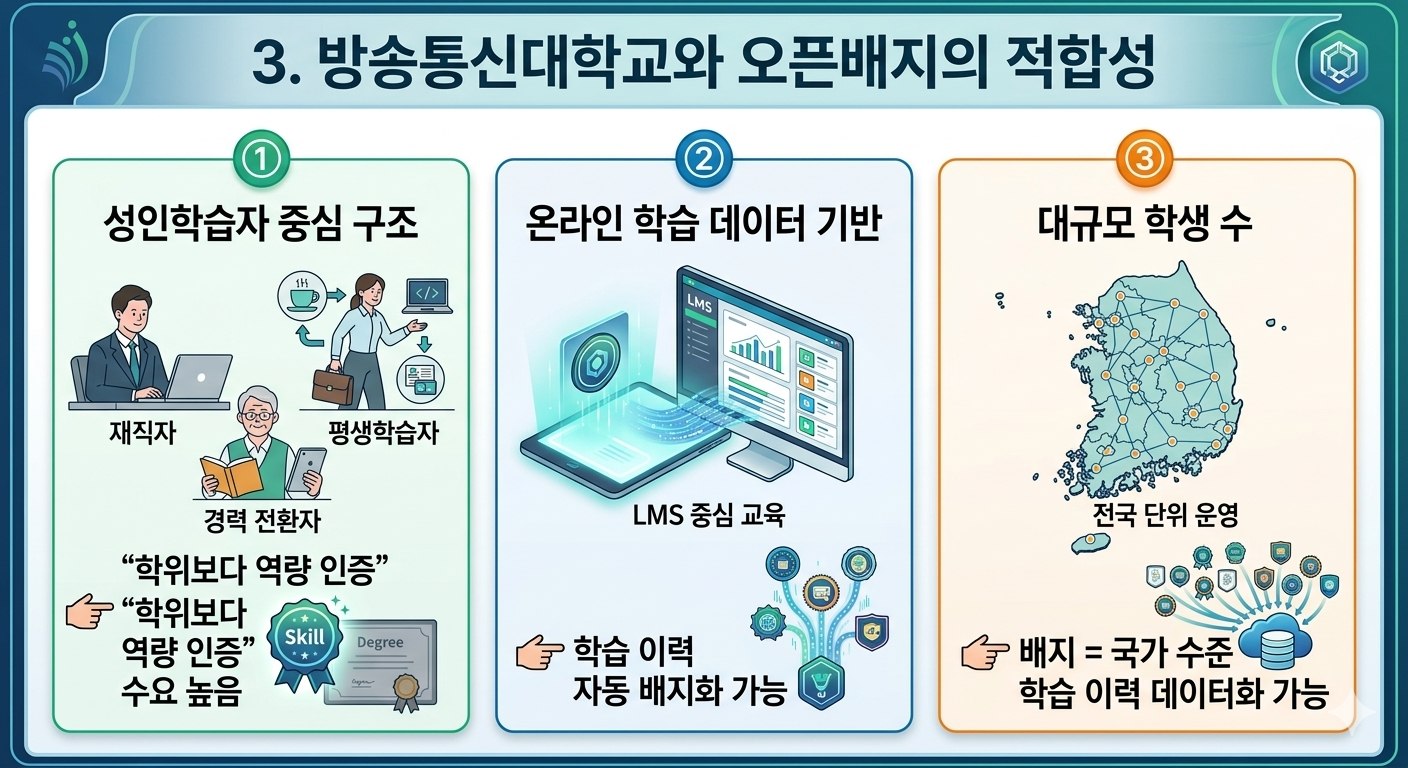
Korea National Open University is a national university in Korea that provides learning opportunities through education centered on online learning and through 13 regional campuses across the country. In addition to undergraduate and graduate programs, it also offers lifelong education programs.
For students whose reasons for learning differ, such as working people and those aiming to change careers, the meaning of what they gain at university is not the same for everyone. In addition to earning a degree, deepening knowledge in a specialized field, acquiring new skills in technology, and preparing for the next job are also important. The university's Open Badge plan seeks to show this diverse learning as the abilities of each individual student.
Background
The background: achievements that a degree alone cannot fully express
A degree is an important credential that shows learning at a university. At the same time, it has limits in conveying in detail the achievements built up along the way, such as accomplishments in major courses, practical training, projects, and extracurricular activities.
Korea National Open University has course enrollment and completion data accumulated through online learning. What the university focused on was turning that data, rather than keeping it only in the university's records, into proof of abilities that students themselves can carry and present when needed.
Open Pathways
A four-stage roadmap designed to follow students' growth
The first stage of the roadmap is competencies in majors and practical training. It recognizes achievements in major courses and in experiments and practical training, showing what students have learned and what abilities they have gained.
The second stage extends the scope to advanced technology and industry-academia cooperation. Envisioning fields such as AI, data analysis, and the cloud, and with collaboration with companies also in view, it connects learning outcomes to job skills.
The third stage is employment and extracurricular activities. Experience gained outside classes, such as internships and volunteering, also becomes eligible for recognition, so that students can combine multiple achievements to show their own strengths.
The fourth stage covers lifelong education and regional collaboration. With continuing education after graduation and talent development in the community also in view, the plan aims to connect learning that began at the university to ongoing skill development.
Future
Connecting the university's learning data to students' futures
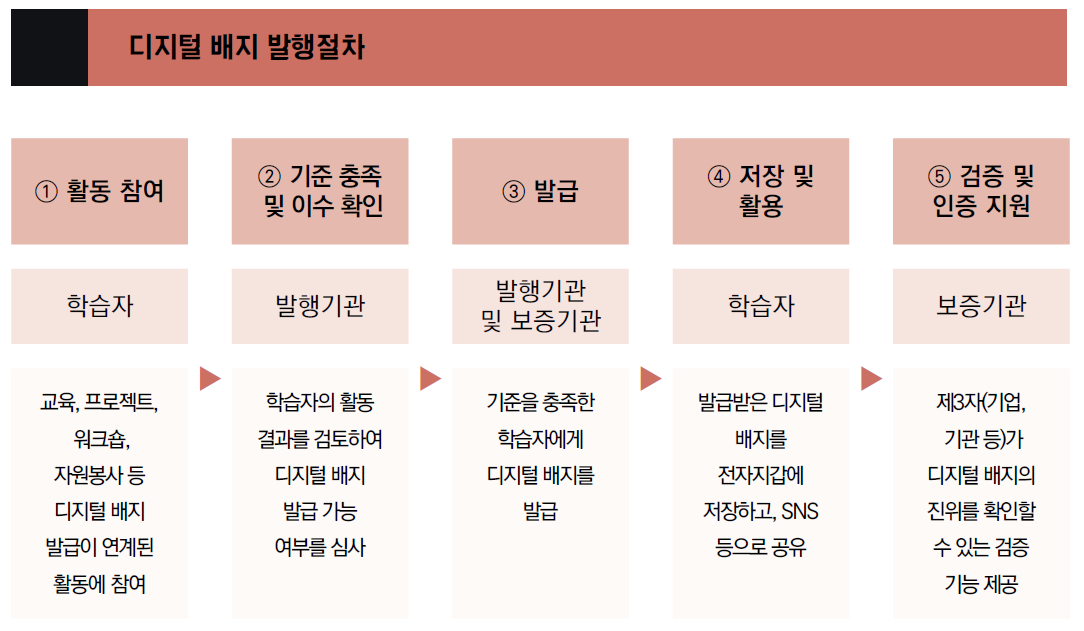
What sets this initiative apart is not issuing Open Badges individually, but designing everything from learning after enrollment through life after graduation as a single path (an Open Badge pathway).
By building up small achievements, students can show their abilities in concrete terms.
For the university as well, it becomes a means of organizing its accumulated learning records and understanding its educational outcomes more clearly.
What Korea National Open University aims for is not to replace the value of degrees.
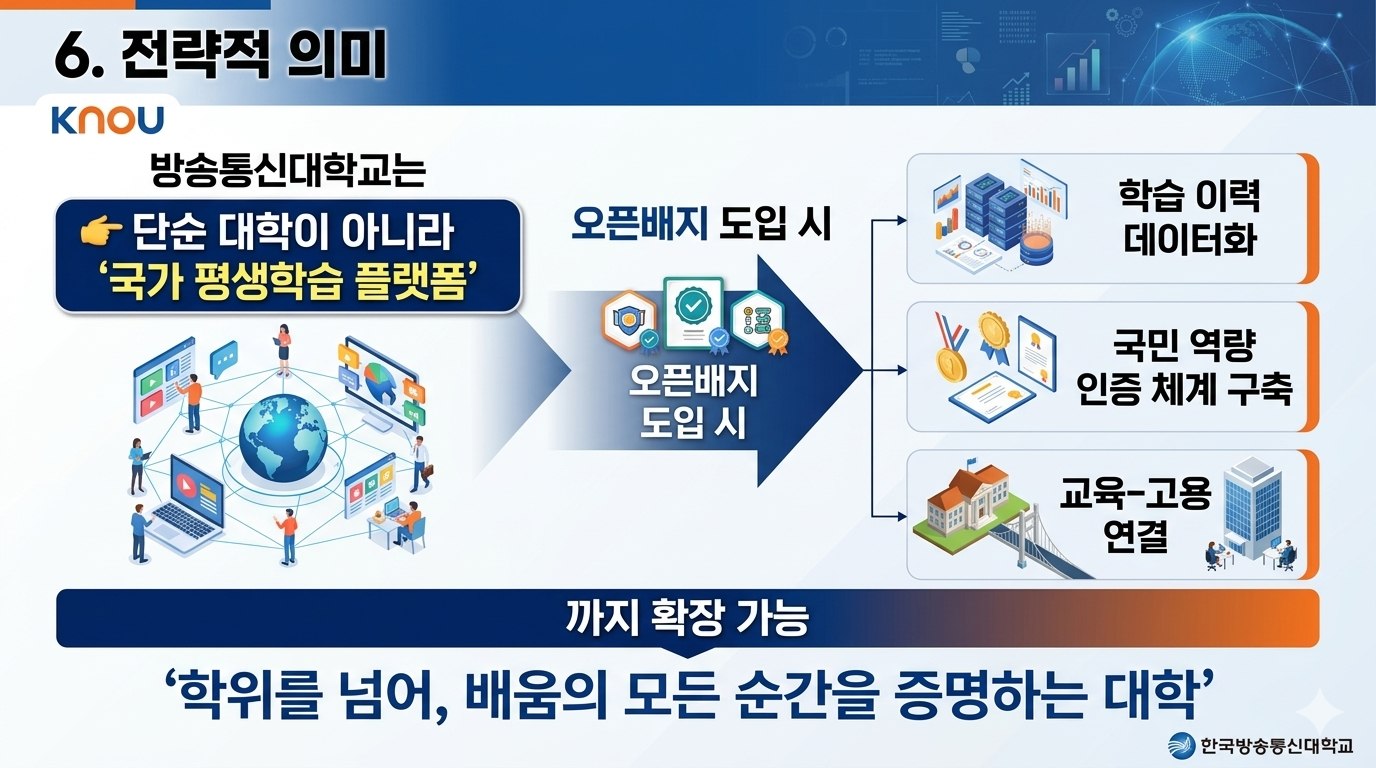
It is to shed light on and make visible, through the system of Open Badges, the learning process that was hard to see from a degree alone, so that students can put those outcomes to use in society.
The plan of this university, with its large-scale distance-learning foundation, points to one direction for a question shared by universities across Asia: how to return learning data to students and, with Open Badges as the foundation, link education, careers, and lifelong learning.
Profile
Korea National Open University profile
- Organization name
- 한국방송통신대학교
- English name
- Korea National Open University
- Country or region
 Korea
- Organization type
- Educational institution
- Official website
- engknou.knou.ac.kr Visit the website (external site)
Contact
Consultations on issuing badges are accepted by email
Please feel free to get in touch about issuing badges, collaboration, events, media inquiries, and more.